Saturday, October 30, 2010

Some Arkansas Ghost Stories & Tales of the Unexplained

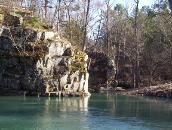
Since Halloween weekend is here, I thought you might enjoy a few tales of ghosts and unexplained events and things from Arkansas history.

Ghost stories are an important part of Southern culture and many have been handed down to us from our ancestors who once sat around fireplaces and campfires to tell stories on cold winter nights. These tales were a source of entertainment that fired the imagination long before the days of radio, tv and internet. Whether they are true or not is a matter of individual belief, but they are definitely part of our culture and remind us of days long past.

Here are a few stories from Arkansas that I've looked into over the years. If you know others, tell us about them by posting comments. I'd love to hear them.
You can always read more Southern ghost stories and legends at www.exploresouthernhistory.com/ghosts.

Tuesday, October 19, 2010

Haunted Battlefield Tours at Prairie Grove set for Saturday

      Prairie Grove Battlefield State Park would like to invite everyone to the Haunted Battlefield Tour on Saturday October 23rd, starting at 7 p.m. meeting at the park Amphitheatre.  The Haunted Battlefield Tour is in reminiscence of what happened at Battle of Prairie Grove.  The Union Army of the Frontier and the Confederate Army of the Trans-Mississippi fought one of the most intense and bloody battles west of the Mississippi River on December 7, 1862.  The tour begins with a half-mile walk from the Amphitheatre to the front of the historic Borden House along part of the park's walking trail and into the valley where the heaviest fighting occurred during the Battle of Prairie Grove.  Chances are good that there will be a few surprises along the way.  When the walk is finished you may continue on a hayride or walk back up the hillside on your own. 
Parking will be available at the east entrance of Battlefield Park at the Borden House parking lot.  Guides will then escort visitors in groups of 30 along the park's walking trail for a 30-minute eerie tour of the grounds.  Tour groups will hear from guides and walk by the areas of the gruesome battle during the Civil War.  Tours depart every 20 to 30 minutes.  The last tour will conclude around 10:00 p.m.  Admission: $2 Adults, $1 Child (3-12).  Tickets are required for tour departures.  Tickets are available on arrival at the park Amphitheatre in front of the camp fire the night of this event.  All events are subject to changes because of weather.
Hindman Hall Visitor Center and Battlefield Museum is closed for renovation, the temporary Visitor Center at the Latta Barn is open daily from 8:00 a.m. until 5:00 p.m.  For more information or in case of bad weather contact the park: Prairie Grove Battlefield State Park, 506 E. Douglas Street, Prairie Grove, AR 72753; or call (479) 846-2990; e-mail prairiegrove@arkansas.com.  Check us out on the web at http://www.arkansasstateparks.com/prairiegrovebattlefield for information about the Battlefield Park and other Arkansas State Park locations and a full list of events. You can also learn more about the Battle of Prairie Grove at www.exploresouthernhistory.com/ArkansasPG1.

Thursday, July 29, 2010

Battle of Massard Prairie - Augusta (Georgia) Chronicle and Sentinel, October 5, 1864

The following appeared in the Augusta, Georgia, Chronicle and Sentinel on October 5, 1864, and quotes an obvious eyewitness account that appeared in the Meridian, Mississippi, Clarion. Both were Confederate newspapers. The account describes the Battle of Massard Prairie, which was fought at Fort Smith on July 27, 1864:

...The fighting took place five miles S.E. of Fort Smith, in Mesard Prairie. The Lincolnite forces consisting of the "Kansas Sixth" and the so called home guards. The first has long been a "crack" regiment, alike noted for its ferocity, fanatacism and brutality. Gen. Gano divided his Texans into two bodies, while the Choctaws formed a third. One held in person on the center, whilst the others executed a flanking movement on either hand.

Advancing to the summit of an eminence where Yankee balls were whizzing all around him, Col. Folsom prevailed on his Choctaws to accompany him over a broad space to the face of the enemy. The other bodies charged simultaneously, and the robbers finding themselves previously assailed on front and on both flanks commenced a skedaddle from the rear, whilst others fought with desperation, until assured of quarters, when they surrenders. - Many of our men clubbed with their guns and dealt stunning blows; several guns were in this way broken. One hundred and twenty-seven were captured and about sixty killed. The pursuit was kept up to within two miles of Ft. Smith. The number of the enemy's wounded could not be ascertained. Our men obtained a rich booty - 200 Sharp's rifles, 400 revolvers, hundreds of excellent saddles, a considerable number of over coats and many other things.

Note: If you are interested in learning more about the Battle of Massard Prairie, please visit www.exploresouthernhistory.com/massardindex or consider my book on the encounter. It is available on this page.

Thursday, July 22, 2010

Battle of Massard Prairie - Fort Smith New Era of July 30, 1864

Note: Next Tuesday will mark the 146th anniversary of the Battle of Massard Prairie at Fort Smith, Arkansas. Over the next few days, I will be posting a series of accounts of the battle that appeared in newspapers, both North and South, in the days and weeks following the engagement. If you are interested in reading more, my book on the battle can be ordered on this page. You can also visit my webpages on Massard Prairie at www.exploresouthernhistory.com/ArkansasCW4.

Fort Smith New Era (Unionist)
July 30, 1864

REBEL ATTACK ON OUR OUTPOSTS

Last Wednesday, July 27th, about sunrise a strong force of rebels under Geneal Gano, consisting of the 30th, and part of the 31st regiments Texas Cavalry, Col. Well's battalion, and Folsom's and Walker's regiments of Choctaws of Cooper's brigade, in all, about two thousand men, made an attack upon a battalion of the 6th Kansas cavalry, numbering about 200 men and commanded by Maj. Mefford of that regiment on Mazard prairie, about seven miles from town.

Our men fought most heroically against overwhelming odds, retreating slowly towards town and contending every inch of ground. They were however, at last completely surrounded and overpowered and a number taken prisoners, among whom were Maj. Mefford and Lt. De Friese. Ten of our men were killed, 15 wounded; the rest fought their way through.

The rebels lost 12 killed and 20 wounded.

As soon as the news of the attack reached Headquarters, Col. Judson, 6th Kans. Cav., hastened to the scene of the action with a mounted force, but found that the enemy had left an hour and a half before his arrival. He pursued him five miles across the mountain, ascertaining that he had nothing except the prisoners and what could be carried away on horses. The Colonel then halted and sent five scouts forward until they came up with the enemy's rear, which they reached about 3 o'clock p.m., near the crossing of the Poteau, about ten miles from the camp. The colonel then returned to the camp and found that the enemy had burned about three fourths of the camp and had left in a great hurry, leaving large quantities of Quartermaster's stores and transportation unharmed.

Monday, July 19, 2010

Talimena Scenic Drive explores historic Ouachita Mountains


The western Ouachita Mountains presented a major natural barrier to the southward advancement of Union troops along the Arkansas and Oklahoma (then the Indian Territories) border during the War Between the States.
The mountain range runs roughly east to west from near Little Rock into eastern Oklahoma. A series of commanding ridges and mountains, some of which are the highest points between the Appalachians and the Rockies, the Ouachitas served as a natural defense for Confederate forces during the war and also provided protection for Southern families and even guerrilla gangs that moved in and out of the mountains with impunity.

Now a major scenic area for visitors to the region, the mountains can be explored and accessed by way of the Talimena Scenic Drive, a national scenic byway that stretches 54 miles from Mena, Arkansas, across the border to Talihina, Oklahoma. As it winds its way along the very tops of the mountains, the drive passes not only some of the most beautiful scenery in the South, but an array of unique historic sites as well, many of them with Civil War ties.

Some of these include Queen Wilhelmina State Park and Rich Mountain Cemetery in Arkansas. The state park features numerous historic sites, including a mountain spring used by pioneer families at the time of the war. The first grave in the cemetery is said to have been that of a young girl who froze to death on a brutal winter's night during the war years. Her ghost supposedly still haunts the rugged terrain.

Along the Oklahoma stretch of the scenic byway are historic sites such as Horse Thief Spring and the Old Military or Fort Towson Road. The spring is was a water souce for Old West outlaws including that prowled the borderlands during the years after the Civil War. The Old Military Road, now marked by a park area with interpretive signs, was a major route through the mountains for Confederate forces and civilians.

The high elevations also provide welcome relief from the height of summer with cool breezes sweeping up the mountainsides to the overlooks and park areas along the Talimena Scenic Drive.

To learn more about this remarkable roadway, please visit www.exploresouthernhistory.com/ARTalimena1.

Friday, July 16, 2010

Ozark National Forest is rich in Historic Sites

Sweeping across much of the northwestern quarter of Arkansas, the Ozark National Forest preserves some of the most scenic and historic land in the Natural State.

Not only is the forest home to sweeping mountain vistas, rugged hills and valleys, waterfalls and the famed Mulberry River, it is rich in historic sites and landmarks. At unexpected places in the forest, hikers come across long-forgotten stone fences and traces of old home places, many of which date back to before the Civil War.

The Ozark National Forest was the scene of untold numbers of skirmishes and raids during the war. Not only did regular troops move back and forth along the roads leading through the mountains, the hills of the Ozarks provided shelter and hiding places for the guerrilla bands that ravaged much of the state. These men - some of whom supported the Union and others the Confederacy - in many cases employed increasingly brutal tactics against both military and civilian targets alike.

The forest is today accessed by such famed Arkansas highways as Scenic Highway 7 and the Pig Trail Scenic Byway. Both take visitors past beautiful scenery and through some of the most stunning country in the South. There are numerous parks, recreation eras, overlooks, campgrounds, picnic areas and landmarks.

To learn more, please visit www.exploresouthernhistory.com/ozarknf.

Thursday, June 17, 2010

Belle Grove Historic District - Fort Smith, Arkansas

Some of the most beautiful Civil War landmarks in Arkansas can be found in Fort Smith's unique Belle Grove Historic District.

Bounded by North Fifth, North H, North Eighth and North C Streets and located just a couple of blocks north of Garrison Avenue in downtown Fort Smith, Belle Grove preserves architecture spanning 130 years and numerous architectural styles. It was a thriving community at the time of the Civil War and the home of some of the most prosperous business leaders in western Arkansas.

The oldest home in the district is the John Rogers House, built in 1840 and modeled after the brick quarters of the fort from which Fort Smith takes its name. Rogers was one of the founders of the city of Fort Smith and ironically his house outlasted all but two of the buildings of the fort that was for a time the "little Gibraltar on the Arkansas."

Also dating from before the Civil War is the Casper Reutzel House. Built in 1850, it was the home of largest cotton shipper on the Arkansas River. Not only was the house built in an unusual half timber style, it was also loopholed for musketry to allow its inhabitants to hold off an attack.

The Belle Grove Historic District was actually within the fortifications erected by Union troops around the downtown area in 1864 and houses there were used to quarter troops. The city came under direct attack only once, but the fighting took place well away from the district.

To learn more about Belle Grove Historic District, please visit www.exploresouthernhistory.com/fsbellegrove.

Sunday, June 13, 2010

Cane Hill College - An Educational Landmark in Northwest Arkansas

This old brick building on College Avenue in Canehill holds a unique place in the history of Arkansas. It was the last structure built to house Cane Hill College, one of the most remarkable educational institutions of the 19th century.

Northwest Arkansas was still the frontier in 1834. Fledgling settlements were taking root, one of the most important of which at the time was actually made up of a series of three communities located atop a ridge known as Cane Hill. Surrounded by good farm land in the shadow of the Boston Mountains, the settlement was well populated and a center of of activity by the Cumberland Presbyterian Church.

By the fall of 1834, the progress of the community had reached a point to allow the early settlers to think of such things as schools for their children. On October 28th of that year a group of Cumberland Presbyterians met and voted to establish Cane Hill School, which opened the following year in a two-room log building.

By the time of the Civil War, the school had progressed to become the first four-year college in Arkansas and was operating from a campus of four buildings. When most of the students of the all male school enlisted in the Confederate army in 1861, Cane Hill College closed its doors for the duration of the war.

On November 28, 1862, the Battle of Cane Hill swept across the campus as Union troops attacked Confederate forces in an important preliminary action to the Battle of Prairie Grove. Confederate artillery fired from the hill adjoining the campus and the dorm building was used as a Union military hospital after the battle. It took on more patients after the Battle of Prairie Grove on December 7, 1862.

By the end of the war much of Cane Hill had been burned to the ground and only one building from the pre-war college survived. The school would rebuild and go on to become the first coed college in Arkansas and shortly afterwards graduated the first five women to receive four-year degrees in the state.

The growth of Fayetteville and establishment of what would become the University of Arkansas, along with a destructive fire in 1885 ultimately led to a decision by the Arkansas Synod to close the doors at Cane Hill in 1891 and relocate the school to Clarksville where it continues to thrive today as the University of the Ozarks.

The building built to house the college after the 1885 fire still stands, however, and is a unique and special part of the heritage of Arkansas. To learn more, please visit www.exploresouthernhistory.com/canehillcollege.

Friday, May 14, 2010

The Seizure of the Arkansas Cannon in 1861

On April 17, 1861, a mob of citizens stormed aboard two steamboats tied up on the waterfront at Cincinnati, Ohio. The vessels were the Glendale and the Ohio No. 3. On board they carried a massive shipment of armament and supplies including field guns, similar to the one shown here that is on display at Fort Smith National Historic Site.

The 23 large boxes of supplies were being shipped from New York to Arkansas to fill an order placed in February of 1863 by Governor Henry Rector. Although Arkansas had not yet seceded from the Union and would not do so until May, the governor and other key leaders of the state were doing their best to prepare for the war that they felt would unavoidably reach Arkansas. A large shipment of miltiary supplies was contracted from a firm in New York for delivery as soon as possible.

The shipment aboard the steamboats included artillery carriages, ammunition, arms and field guns. There was also a large number of training manuals for use in drilling the state's raw militia.

By the arms and other supplies made their way to Baltimore and across the Baltimore & Ohio Railroad to the Ohio River, the North was up in arms over the Confederate bombardment and capture of Fort Sumter in Charleston Harbor. A mob stormed aboard the steamboats and seized all of the military materials, which included only part of the the total order.

The shipment was soon seized by the U.S. Marshal at Cincinnati persuant to the orders of the U.S. District Attorney there. This led to a court battle over the true ownership of the cannon and other material. It ultimately was ordered to be returned to the New York firm that had shipped it. The guns were provided to New York artillery units and went on to serve against Confederate forces during the war.

To read a full 1861 account of this unusual episode, please visit www.exploresouthernhistory.com/arkansascannon.

Wednesday, May 5, 2010

1863 Pro-Union Demonstration in Fayetteville

The following report from Fayetteville appeared in newspapers across the North during late January and early February of 1863. I found it interesting because it speaks well to the divided nature of the war in Northwest Arkansas. The rally took place shortly after the Battle of Prairie Grove and the successful Union raid across the Boston Mountains to van Buren and indicates a strong swing of public opinion in favor of the Union in Fayetteville. Most of the pro-secession citizens had fled the city by this point and were living as refugees elsewhere.

Union Demonstration at Fayetteville, Arkansas.
Fayetteville, Ark., Jan. 25,
An enthusiastic Union demonstration occurred here yesterday. Over 1,000 loyal citizens of Arkansas were present. Speeches were made by Dr. Johnson, a prominent Union refugee: Colonel Bishop, of the 1st Arkansas Cavalry, and others. Fifteen Home Guard companies were organized and wish to be accounted as Arkansas militia. Hundreds of citizens signed a petition to order an election of member of Congress from this State. All citizens having arms in their possession have given them up, to be used for the defence of their homes.

I'll be posting additional transcripts of reports from Fayetteville over the coming days so be sure to check back. You can also learn about the battlefields and historic sites in and around the beautiful Northwest Arkansas city by visiting www.exploresouthernhistory.com/fayetteville.

Thursday, April 15, 2010

Castle Morgan - Point of Origin for many of the Sultana victims

The wreckage of the ill-fated steamboat Sultana was found some years ago buried beneath a soybean field near West Memphis. The Mississippi River has changed its course over the years since the war and now flows about two miles away from where the Sultana went down in 1865.

One of the best-known tragedies of the Civil War, the sinking of the Sultana took place when the overloaded paddlewheel steamboat tried to carry more than 2,000 released Union prisoners of war up the Mississippi from Vicksburg. A boiler explosion (or torpedo, according to one post-war confession) ignited a fire on the boat and the loss of life was horrendous. It is thought that around 1,800 men died in the fire and sinking. Another 300 died from burns and other wounds in the weeks and months after the accident.

Among the former p.o.w's aboard the Sultana at the time of the accident was a large group of soldiers from the Cahaba military prison at Old Cahawba, Alabama. Also known as "Castle Morgan," apparently in honor of Confederate General John Hunt Morgan, the prison was located in a never completed cotton warehouse overlooking the Alabama River. Conditions were abysmal, but the death rate at Castle Morgan was relatively low when compared to other Civil War prisons.

When the prisoners were freed at the end of the war, they were taken first to Vicksburg.From there they embarked for home aboard the Sultana, which went down in Arkansas on April 27, 1865.

The ruins of the Cahaba prison are now preserved as part of the Old Cahawba Archaeological Site near Selma, Alabama. To learn more, please visit www.exploresouthernhistory.com/oldcahawbaprison.

Tuesday, April 6, 2010

Muskogee Azalea Festival's Major Weekend is Here

This one is not Civil War related (although the nearby Honey Springs Battlefield is well worth a look), but one of my favorite events in the region moves into high gear this weekend.

Saturday will be the main day for this year's Muskogee Azalea Festival in Muskogee, Oklahoma. The annual festival is one of the finest such events in the South. Honor Heights Park, where the main festival is held, will feature carriage rides, food, activities for kids and lots more this on Saturday. The park features one of the finest settings of azaleas and dogwoods you will find anywhere. They have more than 600 varieties growing in beautiful plantings that you can explore by either walking or driving.

The festival is free to explore, although various attractions like the carriage rides do charge. Some other unique events goiing on in conjunction with the festival are trolley rides through historic parts of Muskogee, an art exhibition at the Five Civilized Tribes Museum, a chili cookoff and more.

Muskogee is an easy drive from much of western Arkansas and is only an hour or so from downtown Fort Smith. If you are interested in learning more, please visit www.exploresouthernhistory.com/okmuskogeeazalea.

Wednesday, March 31, 2010

New Webpage Available on the Battle of Fort Smith

Continuing with my efforts to provide more information on the history of Arkansas online, I have a new webpage up on the Battle of Fort Smith. This is an extension of the pages I have put up over the last couple of years on Fort Smith and the Battle of Massard Prairie. You can check it out at www.exploresouthernhistory.com/battleoffortsmith.

This engagement took place on July 31, 1864, when Confederate forces led by Brigadier General Douglas H. Cooper launched a major demonstration against the fortifications protecting the southern approaches to Fort Smith. Inspired by General R.H. Gano's successful attack at the Battle of Massard Prairie four days earlier, Cooper hoped to surprise outlying Union picket posts, capture livestock and supplies and provide an opportunity for pro-Southern families in the area to evacuate.

Moving up at dawn, the Confederate struck from multiple directions at once. One column, led by General Gano, crossed over to Massard Prairie again hoping to repeat the success of the 27th. A second small party, composed of Native American riflemen, moved down the peninsula formed by the confluence of the Poteau and Arkansas Rivers to fire into the main garrison of Fort Smith. The two largest columns, meanwhile, moved up the Fort Towson (today's Towson Avenue) and State Line roads. The advance was led by the famed Cherokee, Brigadier General Stand Watie.

The fighting went about as Cooper had planned. For the next several hours, the Confederates battled a force of Federals who came out of the Fort Smith defenses to fight. Their mission accomplished, they finally withdrew after capturing or destroying an estimated $130,000 in Union supplies.

To learn more, please visit the new page on the Battle of Fort Smith at www.exploresouthernhistory.com/battleoffortsmith.

Monday, March 22, 2010

Parley P. Pratt Grave Site - Alma, Arkansas

With the exception of John Brown's raid on Harper's Ferry, perhaps the most widely reported episode leading up to the War Between the States was the U.S. Army's campaign against the members of the Church of Jesus Christ of Latter-day Saints in Utah.

Called the Mormon or Utah War, the anti-climactic campaign involved key officers of the U.S. Army and consisted of a long and difficult march across the Great Plains to Utah, where President Franklin Buchanan had come to believe that Brigham Young and his followers were spoiling for a war with the United States. The LDS Church members had organized a large militia force, a small portion of which was involved in one of the most tragic incidents of the 19th century.

At a place called Mountain Meadows in Southern Utah, a small force of militia joined with local Native American warriors to attack and massacre a large party of emigrants who were making their way from Arkansas to California. After suffering through an ambush and siege, the members of the Baker-Fancher wagon train were convinced to surrender on September 11, 1857. Every adult and teen in the party was then slaughtered without mercy. At least 120 died.

It has never been conclusively proved, but many researchers believe that the massacre was instigated in part by an incident that took place in Crawford County, Arkansas, in 1857. Parley P. Pratt, a key leader of the LDS Church and member of its Council of Twelve Apostles was brutally murdered by Hector McLean and six other men on the Wynn farm near present-day Alma.

McLean was the estranged husband of one of Pratt's twelve wives, a woman named Eleanor McLean. Pratt had been arrested near Fort Gibson in the Cherokee Nation after McLean swore out a writ against him, accusing him of theft. The items allegedly stolen were the clothes being worn by Eleanor's children. Brought to Van Buren, he appeared in court and was released. Realizing that McLean was hard on his trail, Pratt hoped to avoid violence by riding alone north into the Boston Mountains and then hitting a road back into the Cherokee Nation.

Instead, he was cornered just off today's Interstate 540 by McLean and six of his followers. Without arms to defend himself, the LDS apostle was stabbed and shot. He died about two and one-half hours later. He was buried on the Wynn farm, where the grave site is marked today by a stone memorial. His murder has been listed by some writers as one of the reasons LDS Church members in southern Utah took it upon themselves to slaughter the Arkansas emigrants.

To learn more about the assassination of Parley P. Pratt and his grave site near Alma, please visit www.exploresouthernhistory.com/parleypratt.

Thursday, March 18, 2010

Interesting Account of the Battle of Van Buren, Arkansas

The following is a report on the Battle of Van Buren (December 28, 1862) that appeared in a Maine newspaper just four days later. The speed with which reports of battles in western Arkansas reached newspapers in the far Northeast is remarkable when it is considered that just a few years before, it would have taken weeks for the news to arrive. The report was datelined Fayetteville, December 31, 1862:

January 1, 1863
Portland (Maine) Daily Advertiser, page 2.

Additional particulars of the raid to Van Buren have been received. Our army was 10 miles this side of Van Buren yesterday, and would bivouac on the mountain top last night, and expected to reach Prairie Grove again today. Gen. Schofield joined them a few miles beyond the foot of the mountain. The steamers violet, Rose Douglas, Frederick Mortrede [Nortrobe], Erie, No. 6, and Van Buren, with their cargoes of grain and provisions for the rebel army, were burned, also a large amount of army stores. The rebels burned their arsenal and ferry boats at fort Smith, to prevent them from falling into our hands; also a large quantity of provisions on the opposite bank of the river. A general conflagration was in progress when our forces left.

The raid on Van Buren clearly demonstrated the shattered condition of the Confederate Army of the Trans-Mississippi, despite the fact that it had fought a superior Union force to a draw at the Battle of Prairie Grove just a little mor than two weeks earlier. The capture of the Arkansas River town was a major blow to the prestige of Confederate forces in the area, although the Federals were unable to permanently exploit their ability to cross the mountains and withdrew back to their camps in Northwest Arkansas for the winter.

To learn more about the Battle of Van Buren, please visit www.exploresouthernhistory.com/vanburenbattle1.